
Source: VBEF / 动脉网, 2 October 2026. Reproduced and translated with permission.
By Ji Jiaying
30 September, Rotterdam, the Netherlands. The morning mist had not yet lifted. In the corridors of the international convention centre in this port city, more than 600 addiction-medicine specialists and representatives from 61 countries were arriving. The aroma of coffee mingled with the late-autumn air drifting from the break area.
Inside the venue, the programme of the 28th International Society of Addiction Medicine Global Congress was under way.
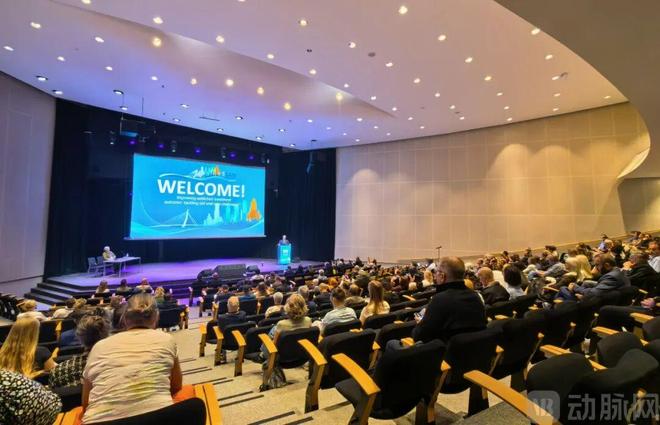
That day, two representatives from China took the ISAM stage in succession. Ning Yihua, Chairman of SceneRay, delivered the only Industry Talk by an invited Chinese company; Professor Hao Wei of the Second Xiangya Hospital of Central South University reported the latest progress by Chinese researchers on brain–computer interface therapies for addiction.
Founded in 1998, the International Society of Addiction Medicine (ISAM) is one of the most authoritative academic organisations in the global field of addiction medicine. This year’s congress theme was “Improving Addiction Treatment Outcomes: Addressing New and Old Challenges”. The innovation invited onto the stage at this gathering of leading scholars was an original Chinese development: Neurestora®—the world’s first brain–computer-interface neuromodulation medical device approved for use in the treatment of drug addiction.
This Chinese original innovation had not been seen by the world for the first time.
From being interviewed by Nature in June to being invited onto this global stage by peers at the present congress, one question warrants further reflection: faced with addiction—a global public-health and social-governance challenge that has troubled humanity for centuries—why could an original innovation from China become a shared answer for addiction treatment around the world?
01
Three months: from Nature to the global stage in Rotterdam
Only a little more than three months had passed since the report in the main journal of Nature.
ISAM is a leading annual event in addiction medicine and a world-class platform for presenting frontier innovations. It has been held 28 times across 18 countries. Every year, clinicians, researchers and policymakers from universities, medical institutions, regulatory bodies and industry gather to discuss the latest progress in addiction treatment and advance the clinical translation of innovation.
Beyond innovation itself, ISAM and the global addiction-medicine community are concerned with a more practical question: as the limitations of conventional approaches become increasingly clear and most novel therapies remain at the conceptual stage, who will serve the large and continually growing patient population?
An answer appeared in Ning Yihua’s presentation, “Fourteen Years of Clinical Validation: Dual-Target DBS for Opioid Addiction.”
Ning Yihua noted that dual-target DBS may reverse pathological changes in the addicted brain—reducing craving for drugs and the drive to use them, while strengthening self-control in response to drug-related cues. What is particularly encouraging is that, after treatment reaches a certain stage, patients may maintain long-term abstinence even after stimulation is stopped and the device is removed.
This means that “curing” addiction is no longer merely an empty phrase.
“For individualised treatment, we maintain rigorous boundaries: stimulation parameters differ from person to person, and every patient has their own dedicated parameters. In the future, we hope to rely on brain-biomarker-driven closed-loop systems to achieve more precise modulation.”
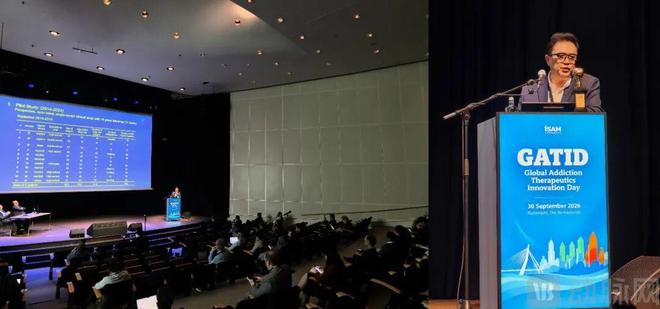
The “fourteen years” referenced in Ning Yihua’s presentation correspond to Neurestora®. In December 2025, it received a Class III medical-device registration certificate from China’s National Medical Products Administration, becoming the world’s first brain–computer-interface neuromodulation medical device used in drug-addiction treatment—turning the idea of regulating two circuits simultaneously into a product that can be implanted in the brain, operate reliably and be controlled remotely.
No one in the world had achieved this before.
At the meeting, Ning Yihua shared long-term follow-up data on Neurestora® with global peers: the six-month adherence rate (non-relapse rate) reached 80%; the seven-year rate of stable long-term abstinence reached 69%; and follow-up for the first group of patients has exceeded ten years. More importantly, some patients were able to have the device removed after two years of treatment and return to everyday life.
This provides the most direct evidence for “cure” rather than merely “control”.
During the Q&A session, psychiatrists and addiction psychologists from the United States, Australia and elsewhere raised their hands one after another. Ning Yihua responded to each: he clearly introduced the components of the treatment model, noted that the total cost was far below the long-term cost of rehabilitation using conventional therapies, and described the current state of parameter adjustment. He also said that a pilot programme for alcohol addiction had started, related papers were being published in sequence, exploration of other treatment-resistant substance-use disorders was accelerating, and collaboration with the global addiction-medicine community was welcome.
02
A fifteen-year journey: a world first from China
To understand the value of “dual targets”, one must first see how difficult the problem is.
In modern medicine, drug addiction is not a manifestation of weak willpower but a chronic, relapsing brain disease. Its treatment is challenging because the brain’s reward system is activated inappropriately: the pleasure and calm produced by drugs also weaken the ability to control impulses, compelling people with addiction to seek and use drugs repeatedly in order to recapture the same feeling. For this reason, even after long periods of abstinence, exposure to drug-related environmental cues can readily trigger relapse.
Understanding the neural mechanisms of addiction and finding effective ways to counter recurrence have long been frontier challenges in neuroscience and medical technology. Many leading teams around the world have invested in this work, but few have truly completed the full path from hypothesis to product.
SceneRay has run this marathon for fifteen years.
From the earliest hypothesis, through mechanism validation and on to clinical implementation, SceneRay worked with multiple clinical institutions, including the team of Professor Hao Wei at Central South University and the team of Professor Gao Guodong at Tangdu Hospital of the Air Force Medical University, step by step turning a hypothesis into reality. Connecting this long path from beginning to end was Ning Yihua: he participated in proposing the dual-target hypothesis with the spirit of a scientist, while also leading the entire journey from engineering realisation to clinical implementation as an entrepreneur.
Throughout the fifteen years, he remained its most determined advocate.
Under Ning Yihua’s leadership, the team identified two key neural circuits behind addiction: the reward circuit, the nucleus accumbens, responsible for reward and drug craving; and the memory circuit, the anterior limb of the internal capsule, responsible for emotion and impulse control. Their interaction creates a vicious cycle of “addiction–relapse”.
On this basis, the team proposed a dual-target collaborative modulation approach combining the “nucleus accumbens + anterior limb of the internal capsule”. Through electrodes implanted in the brain, independent stimulation parameters are applied simultaneously to the two nodes: one to relieve the physiological distress brought by withdrawal and the other to attenuate pathological memories formed through addiction.
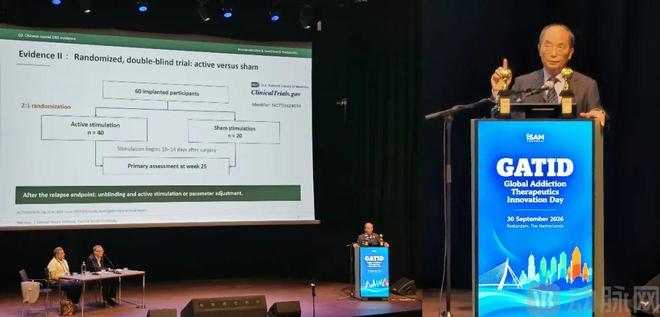
In his keynote speech at ISAM, Professor Hao Wei placed the question in a broader context. He stated frankly that psychiatry is in difficulty because reductionist methods are being used to understand life systems that are too complex. Accordingly, he proposed that neuromodulation research should start with diseases for which mechanisms are relatively clear, animal models are reliable and outcomes can be measured. Addiction—with a clear cause, reliable models and measurable outcomes—is one of the most suitable starting points.
“The next step for addiction treatment is ‘precision’: three core questions must be answered—who is suitable for DBS, how parameters should be adjusted and when stimulation should be changed. The future direction is dynamic regulation through a closed loop of sensing, detection, stimulation and assessment, combined with whole-process care involving monitoring, review and adjustment, so that treatment can truly become individualised.” In his view, this is both the next step for the technology and a defining question the entire field must confront together.
03
Chinese original innovation is becoming a shared answer
The World Drug Report 2026 states that 331 million people worldwide used drugs in 2024. Research published by China Narcotics News in July stated that the United States, home to about 5% of the world’s population, consumed 80% of the world’s narcotic analgesics. From 2021 to 2023, more than 100,000 people in the United States died each year from drug overdose, over two thirds of which involved opioid overdose, creating new challenges for global addiction governance.
Yet the United States is not an isolated case. Drug addiction is a major global public-health issue. Its burden continues to grow, and the need for treatment is far more urgent than imagined. This is precisely why ISAM chose “Improving Addiction Treatment Outcomes: Addressing New and Old Challenges” as the theme of this congress: global addiction governance is at a point where breakthroughs are urgently needed.
As early as 2022, Neurestora® received Breakthrough Device Designation from the US Food and Drug Administration, the first time a Chinese company had obtained this qualification in the fields of neurological and psychiatric disorders.
The company has now established academic collaborations with several overseas clinical institutions, is preparing international multicentre clinical research, advancing an application for a US medical-device registration certificate, and accelerating the establishment of international addiction-rehabilitation treatment centres. From registration to clinical work, from centres to global markets, SceneRay’s international expansion is accelerating on all fronts, with a single goal: to make this approach available to patients around the world more quickly.
During the congress, ISAM presidents and experts from various countries spoke highly of SceneRay and expressed preliminary interest in collaboration. In their view, what SceneRay has accomplished is of great value to the entire field of addiction medicine—not simply because there is one more product, but because there is one more path that has proven workable.
This recognition will also open a faster channel for SceneRay’s global expansion.
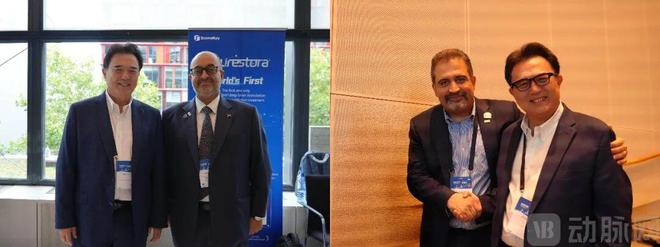
From the pages of Nature to the global spotlight at ISAM, SceneRay’s journey demonstrates one thing: Chinese innovation is moving from being seen to being recognised, and will ultimately shoulder responsibilities and obligations commensurate with its place in global public health.
Returning to the most fundamental question: why can an original innovation from China become a shared answer for global addiction governance?
In the seemingly insoluble challenge of addiction treatment, fifteen shortlisted approaches represent different attempts by global expertise. The only path to pass the dual test of a registration certificate and long-term clinical practice comes from China. SceneRay’s dual-target brain–computer-interface neuromodulation technology ultimately seeks to answer the needs of every person around the world trapped by drug addiction: what they need is a real possibility of finding a way out.
That possibility is accelerating from China to the world.
Cover image source: 123rf.