
Drug addiction is defined by the global medical community as a chronic, relapsing brain disorder rather than a matter of willpower or morality. This article reviews diagnostic frameworks, neuro-pathological foundations, and evidence grades for deep brain stimulation (DBS) across substance-use disorders.
1. Disease status and diagnostic standards
Global consensus on disease nature
Authorities including the National Institute on Drug Abuse (NIDA) and the American Society of Addiction Medicine (ASAM) describe substance-use disorders as chronic, highly relapsing brain disorders. Core features include compulsive drug seeking and use despite harmful consequences, often accompanied by health damage and deterioration in social functioning.
A central pathological feature is persistent change in brain structure and function. Repeated drug exposure reshapes neural circuits; abnormal circuits may remain even after drug use stops, providing a neurobiological basis for relapse. Without appropriate medical care, the course can be lifelong and progressive.
Authoritative bases for clinical diagnosis
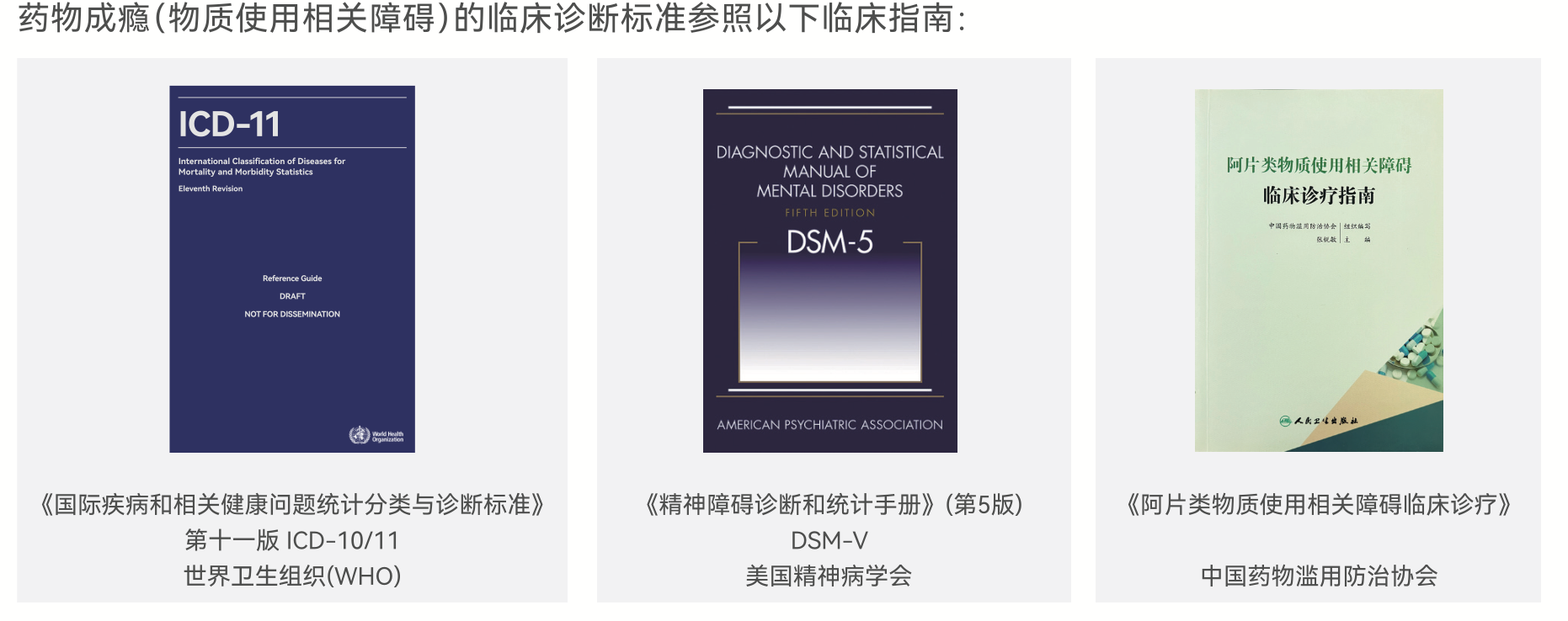
- ICD-11: a globally used classification and diagnostic framework with categories for substance-use disorders.
- Guiding Principles for the Diagnosis and Treatment of Opioid Use Disorders: a clinical framework applicable in China.
- Measures for the Identification of Drug Addiction: a regulatory reference for medical and judicial settings in China.
2. Neurocircuit pathology of addiction
Addiction involves dysfunction in three key circuit systems that also inform DBS target selection.
- Reward circuits: centred on the nucleus accumbens (NAc), with chronic exposure associated with altered reward thresholds.
- Learning, memory and impulse-control circuits: supporting conditioned responses between drug cues and drug-taking behaviour.
- Inhibitory control and decision circuits: supporting behavioural inhibition and rational decision-making; their function may be reduced in addiction.
3. Evidence framework for surgical DBS treatment
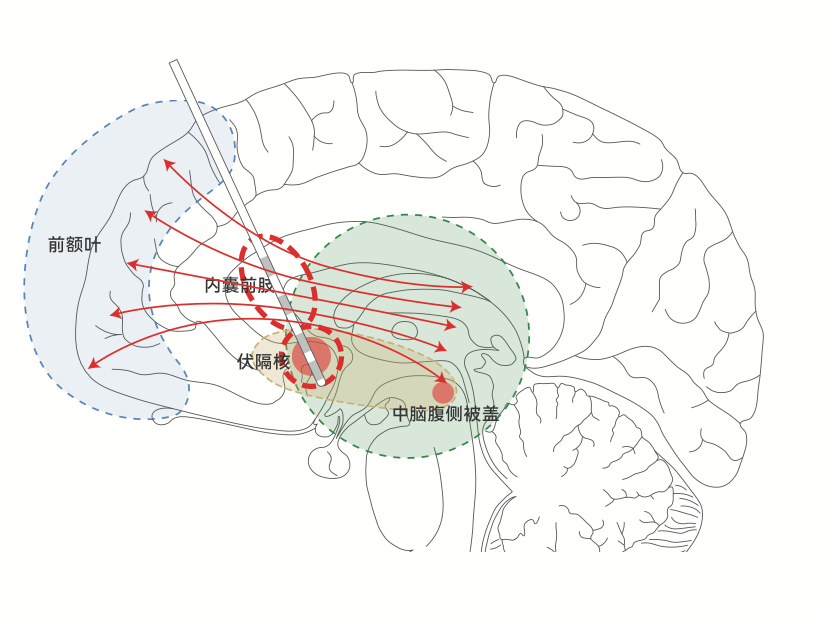
The Chinese Expert Consensus on Surgical Treatment of Psychiatric Disorders sets out evidence and recommendation grades for DBS across different addiction-related conditions and targets. NAc is a broadly studied target across alcohol, opioid and stimulant-use disorders. The anterior limb of the internal capsule (ALIC) also carries a Grade B recommendation in heroin-use disorder; dual-target approaches remain an important avenue of investigation for refractory addiction.
4. Summary
Viewing addiction as a disease supports a shift from punitive or compulsory withdrawal models toward medical intervention and neuromodulation. DBS has accumulated evidence in several refractory addiction settings because of its minimally invasive and adjustable technical characteristics. Ongoing multicentre research is expected to further clarify the evidence base and clinical role of DBS.
References
Measures for the Identification of Drug Addiction, Chinese Government Network.
Guiding Principles for the Diagnosis and Treatment of Opioid Use Disorders.
Hao W, Zhao M, Li J. Addiction Medicine: Theory and Practice. People’s Medical Publishing House, 2019.
NIDA. “Drug Misuse and Addiction.” 2020.
ASAM. “Definition of Addiction.”