
Dual-target brain–computer-interface DBS is an emerging technique for refractory drug addiction. This article explains the neural rationale for combined nucleus accumbens (NAc) and anterior limb of the internal capsule (ALIC) stimulation, together with the programming framework and the controllable, reversible characteristics of DBS.
1. Core rationale of DBS for addiction
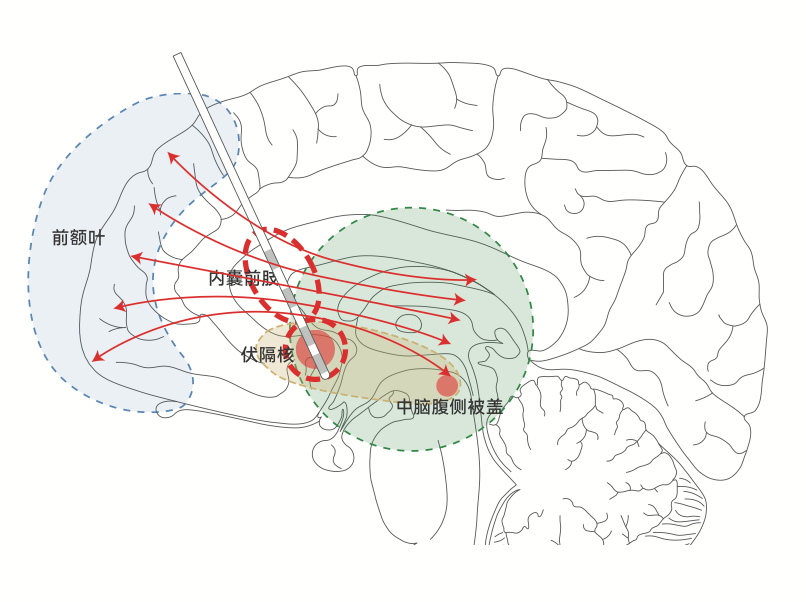
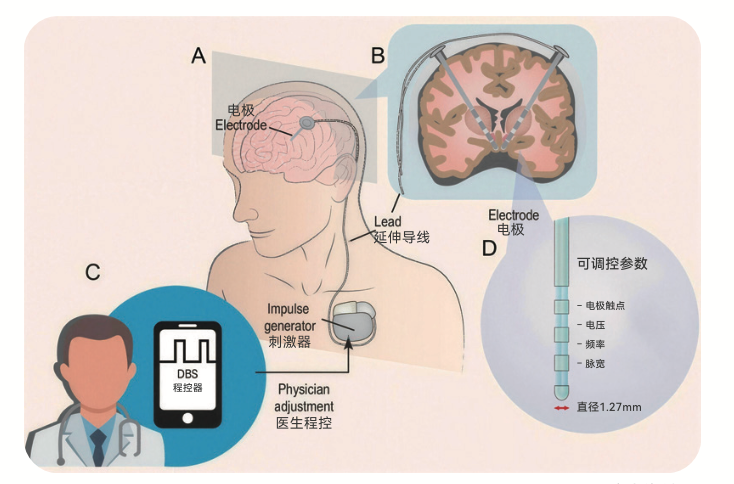
Deep brain stimulation delivers chronic high-frequency stimulation through implanted electrodes to selected brain targets. The aim is to modulate abnormal addiction-related circuits and their functional state, reduce psychological dependence and lower relapse risk after withdrawal.
Unlike radiofrequency lesioning, DBS does not intentionally create permanent tissue lesions. Its effects may be adjusted through electrical parameters, making it a minimally invasive neurosurgical approach used in neuropsychiatric care.
2. Synergistic mechanism of NAc + ALIC dual targeting
Dual-target stimulation covers reward circuitry and impulse-control circuitry simultaneously, supporting multidimensional intervention.
Nucleus accumbens (NAc): addressing reward-circuit dysfunction
The NAc is a central node in reward circuitry. Long-term drug exposure may disrupt its function and increase reward thresholds, contributing to a cycle of drug use, transient pleasure, withdrawal distress and compulsive drug seeking.
- Modulation of abnormal reward circuitry and support for responsiveness to non-drug rewards.
- Potential improvement in negative mood states and reduction of emotion-driven drug-seeking behaviour.
- Reduction of psychological craving through circuit-level modulation.
Anterior limb of the internal capsule (ALIC): reducing cue-triggered impulses
The ALIC is a key pathway between memory systems and prefrontal regions. Drug-related memories may drive abnormal impulses through this pathway, triggering cue-mediated craving and behaviour.
- Reduction of abnormal impulse output from memory systems to the prefrontal cortex.
- Reduction in the frequency and intensity of cue- or memory-induced craving.
- Long-term support for reshaping the memory–impulse–behaviour loop.
Combining the two targets is intended to address reward dependence and impaired impulse control together, potentially providing broader coverage than a single target.
3. Programming framework and individual adjustment
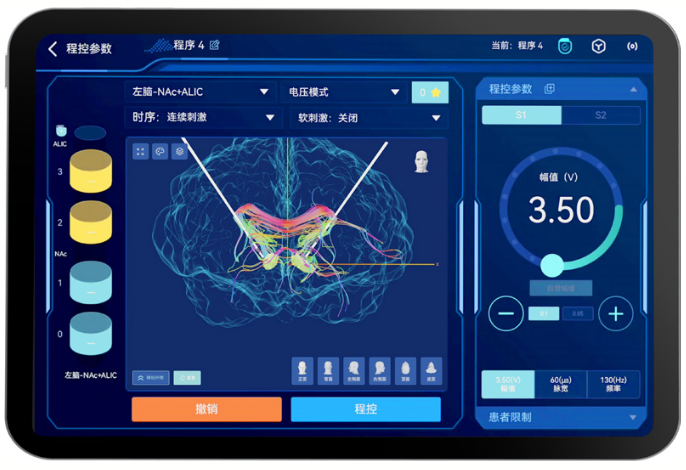
The precision of DBS depends on individual programming. Visual programming systems allow multidimensional adjustment to address differences between patients.
Core parameters in a commonly used clinical programme
- Stimulation target: left NAc + ALIC
- Mode: voltage mode, continuous stimulation, soft stimulation off
- Amplitude: 3.50 V
- Programming terminal: clinician visual programming system
Adjustable dimensions and dynamic programming
Electrode contacts may be changed to adjust the stimulation field; voltage, frequency and pulse width can be adjusted in response to craving, tolerability and adverse effects; timing can be adapted across treatment phases. The process is iterative: initial parameters address acute craving, mid-course visits optimise settings using symptoms and response, and long-term maintenance may adjust parameters as clinical status evolves.
4. Controllability and reversibility
Clinicians can adjust parameters or turn stimulation on and off. If adverse effects arise, settings may be modified promptly. DBS does not intentionally produce permanent brain lesions; after stable abstinence, stimulation may be stopped, and implanted components can be removed surgically when clinically appropriate.
5. Summary
NAc–ALIC dual targeting is based on core addiction pathophysiology and combines modulation of two key circuit systems. Together with fine-tuned visual programming, it offers a dual-target neuromodulation framework for investigation in refractory addiction.
Reference
Ma S, Zhang C, Yuan T-F, Steele D, Voon V, Sun B. Neurosurgical treatment for addiction: lessons from an untold story in China and a path forward. National Science Review. 2020;7(3):702–712.