
Patients & families
Why Is Psychological Craving Harder to Endure Than Physical Withdrawal?
The persistence of psychological craving does not mean that someone lacks willpower. Modern neuroscience suggests that it is related to changes in the brain circuits involved in reward, memory and impulse control.
I. The Brain’s “Hardware Rewiring”: Why It Lasts Longer Than Physical Distress
1. Hijacking and Downregulation of the Dopamine System
Nearly all addictive substances share a common pathway: they stimulate the nucleus accumbens to release large amounts of dopamine, producing intense euphoria. Under normal circumstances, dopamine rewards behaviours that support survival, such as eating and social connection. However, the dopamine peaks caused by addictive substances are five to ten times higher than those produced by natural rewards.
When faced with this extraordinary stimulation, the brain activates a compensatory mechanism—reducing the number and sensitivity of dopamine receptors. The consequences include:
- Tolerance: larger doses are needed to achieve the same effect.
- Anhedonia: after withdrawal, because the dopamine system is suppressed, a person with addiction may feel “nothing” in response to any natural reward—food, hobbies or relationships. This pervasive sense that life has lost its interest can feel even more despairing than physical withdrawal symptoms such as sweating or tremors.
- Persistence: dopamine receptor recovery can be extremely slow. For some people, the brain remains in this low-sensitivity state even years after stopping use, creating a long-term risk of relapse.
2. The Glutamate System and “Indelible” Addiction Memories
At its core, psychological craving is an extreme, entrenched pathological memory. A massive release of dopamine is like applying an exceptionally strong fixative to the page on which a memory is written.
Environmental cues—a street where substances were used, friends, or a lighter—can activate the glutamate system and trigger nearly automatic, compulsive craving. Once these synaptic connections are formed, they can be remarkably enduring. Stopping the addictive behaviour does not erase the memory; it can only leave these memory pathways temporarily dormant. When a cue appears, they may be activated in an instant. This is why people can be highly vulnerable to relapse after physical withdrawal symptoms have resolved if they return to their former environment.
3. When the Prefrontal Cortex “Brakes” Fail
The prefrontal cortex is the brain’s “chief executive,” responsible for impulse control and rational decision-making. Long-term addiction can weaken the grey-matter volume and functional connectivity of this area, leading to an imbalance between two core systems:
- The “braking system” weakens: the ability to inhibit impulses falls sharply.
- The immediate-reward system becomes too strong: sensitivity to the immediate reward signals associated with addictive substances becomes abnormally high.
This means that after physical withdrawal, even when a person rationally understands the harm of an action, the biological foundation for inhibiting impulses may already be impaired when they encounter relevant cues. It can be very difficult to fight a hijacked neural circuit through willpower alone.
Why Traditional Approaches Can Fall Short
Once these mechanisms are understood, it becomes easier to see why willpower alone, conventional medication or psychotherapy may not adequately control relapse in severe addiction.
Medication mainly acts at the neurotransmitter level, such as dopamine and glutamate, but may not precisely reverse the entrenched connections of abnormal neural circuits.
Psychotherapy aims to rebuild cognitive control in the prefrontal cortex. But when the “braking system” itself has an organic functional impairment, this top-down effort can be overwhelmed by powerful bottom-up craving.
This leads to a more direct question: if the core problem is a physical functional disturbance in specific neural circuits, could we regulate those malfunctioning circuits directly, much as a pacemaker corrects a cardiac rhythm?
This is the fundamental reason DBS (deep brain stimulation) has begun to be explored for patients with the most treatment-refractory addictions. It is not an idea that emerged from nowhere; it is a logical intervention approach based on a deep understanding of the neural mechanisms of psychological craving.
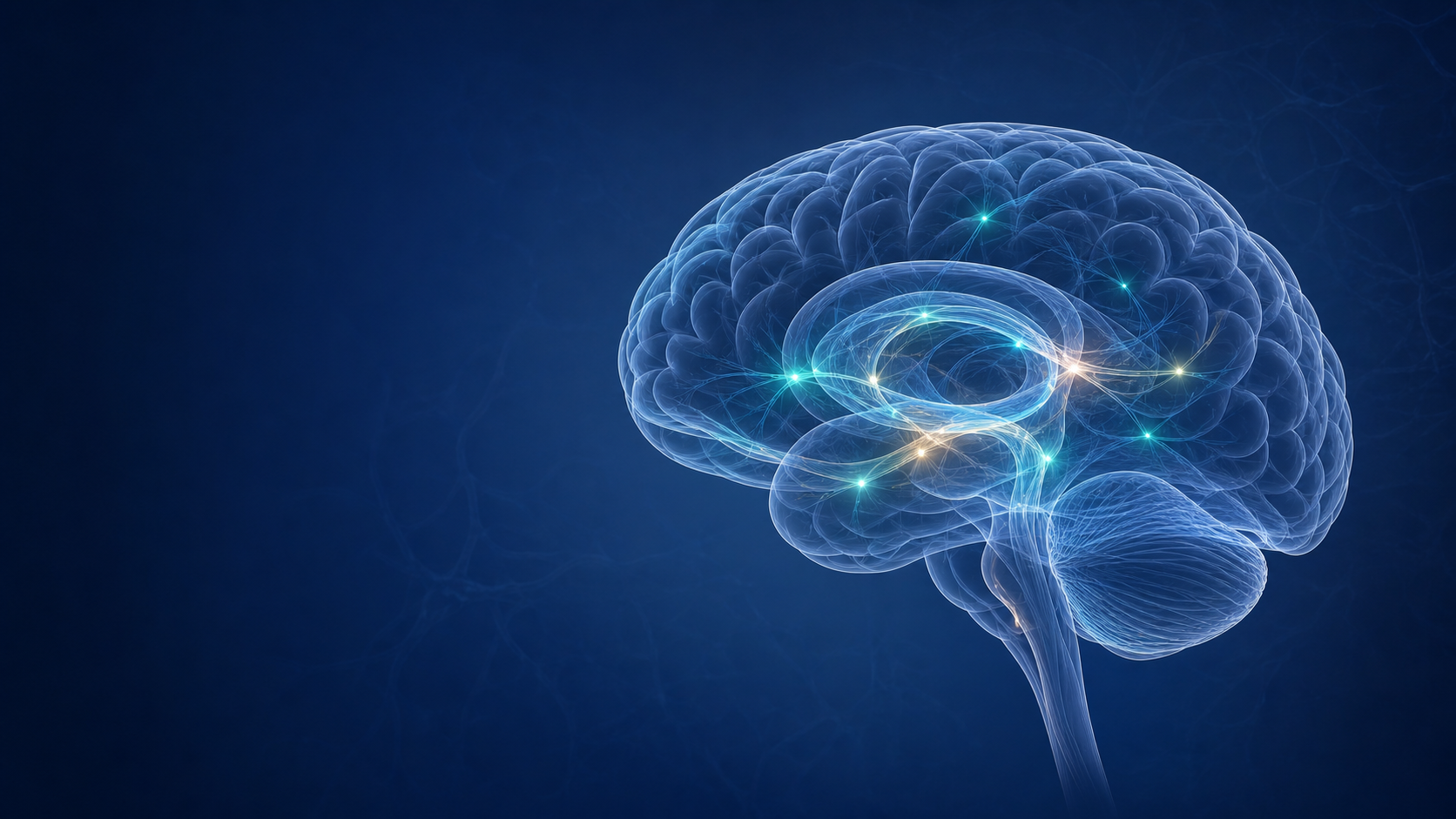
The Nucleus Accumbens: the “Central Processor” of Psychological Craving
Psychological craving is so persistent because it draws the brain’s reward, motivation and impulse-control systems into a vicious cycle. This cycle has a key physical core: the nucleus accumbens.
Nearly all the problems described above converge in this small structure: downregulation of the dopamine system, activation of addiction memories and the triggering of craving. Like an over-sensitised signal-integration centre, it continually sends the false instruction, “I need it.” Medication and psychological approaches have difficulty crossing the skull to regulate its activity with precision.
The Principle of DBS: Precise Neural Modulation
DBS uses a minimally invasive procedure to place very fine electrodes in specific targets such as the nucleus accumbens. A pulse generator implanted in the chest then delivers continuous, very small electrical pulses. Its role is not simply to “excite” or “inhibit.” Rather, like a precise neuromodulator, it uses regular signals to interrupt or reset the pathological neural signal storm that drives craving.
One way to understand this is that the addicted brain circuit is filled with disordered, overactive “noise”—pathological craving signals. The high-frequency pulses delivered by DBS electrodes are like a regular, stable new signal applied to these circuits, preventing neurons from maintaining their original abnormal firing pattern and thereby interrupting the vicious cycle of psychological craving.
From Irreversible to Reversible and Adjustable: a Key Advantage
Unlike earlier destructive procedures, DBS modulation is reversible and adjustable. Clinicians can externally adjust stimulation parameters continuously according to the patient’s situation.
More importantly, by helping restore normal neural-circuit function, it can create an unprecedented “window of opportunity” for psychotherapy and behavioural correction. In a stable state where craving is substantially reduced and impulse control improves, patients may be better able to learn new coping skills and rebuild healthy life patterns.
Humanity’s struggle with addictive substances has lasted for thousands of years, yet for much of that time addiction was regarded as a moral failing or a purely psychological problem.
Advances in modern neuroscience have allowed us, for the first time, to understand this long-standing human challenge through the lens of brain science. Psychological craving is no longer an invisible curse; it can be understood as an observable, localisable abnormality of neural circuits.
This shift in understanding—from “weak will” to “brain disease”—can help remove an unnecessary burden of shame from people with addiction and open the way for interventions that are more precise and more compassionate.
This article is for health education only and does not replace individual medical advice. Treatment decisions should be discussed with the responsible clinical team.