
BCI DBS for drug addiction is presented in the supplied manuscript as an original advance in Chinese brain science. This article traces the pathway from research and clinical trials to regulatory approval, and reviews regulatory, academic and industry-collaboration developments.
1. Corporate technology-development history
SceneRay Medical was founded in Suzhou in 2011 and focuses on brain science and implantable neuromodulation. The manuscript describes its expansion from movement disorders into psychiatric disorders and characterises its BCI DBS work for drug addiction as a pioneering programme.
Research, registration and launch milestones
- Initial innovation phase: development of a dual-target BCI approach and initiation of single-centre clinical work.
- Evidence-building phase: completion of a multicentre randomised controlled registration study, described as the largest of its kind globally.
- Market-approval phase: on 15 December 2025, an implantable deep-brain neurostimulation system was approved by China’s NMPA, described in the manuscript as the first invasive BCI product for an addiction-related psychiatric disorder.
From China’s first addiction DBS procedure in 1999 to approval in 2025, the manuscript describes more than two decades of clinical iteration and a complete transition from research to industrial translation.
Qualifications and industry recognition
The manuscript lists recognition including China’s “Little Giant” designation, inclusion in future-unicorn and local unicorn cultivation lists, Jiangsu high-technology and gazelle enterprise designations, science-and-technology awards, industry-association directorships and provincial research platforms.
2. Regulatory progress
The manuscript states that the addiction DBS programme obtained both China’s NMPA innovative-device green-channel designation and US FDA Breakthrough Device designation, characterising it as the first addiction neuromodulation programme to receive breakthrough recognition from regulators in both countries. It presents this as an indication of international regulatory recognition for Chinese neuromodulation innovation.
3. Academic exchange and industry impact
Domestic academic engagement
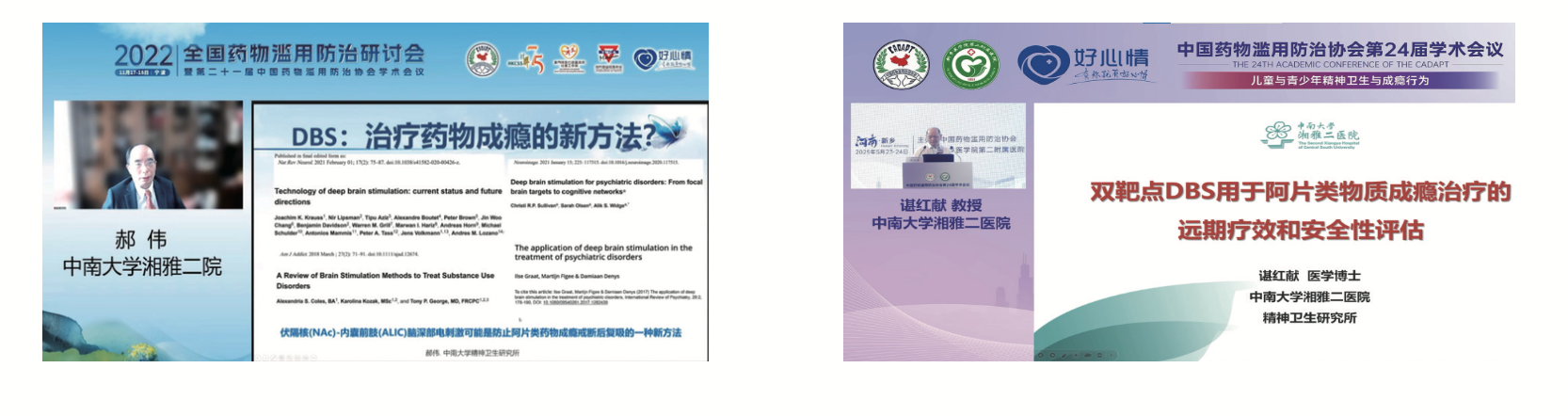
The technology has been presented at national drug-abuse prevention forums and annual academic meetings. The manuscript reports participation in clinical research and evaluation by leading hospitals including Ruijin Hospital, the Second Xiangya Hospital, West China Hospital and Nanfang Hospital, and cites related reviews in National Science Review.
International engagement
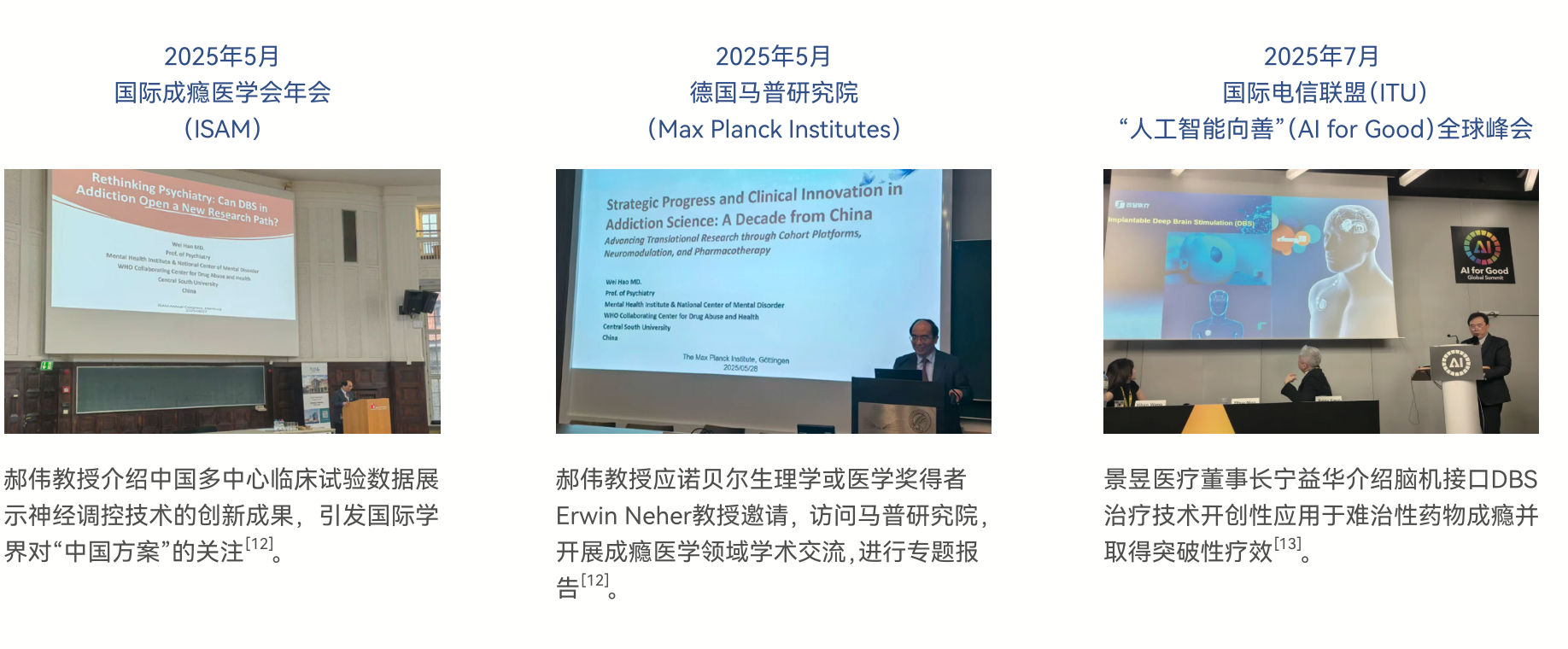
The manuscript highlights presentation of multicentre data at the 2025 ISAM annual meeting, an exchange at the Max Planck Institute, and participation at the ITU AI for Good Global Summit to introduce the social value of BCI DBS.
4. Hospital–industry collaboration and application settings
Examples include a 2020 cooperation agreement with the People’s Public Security University of China to support research in drug-control and rehabilitation contexts, and a 2024 neuromodulation alliance involving the Fourth Affiliated Hospital of Soochow University and Suzhou Guangji Hospital. In January 2026, the Jiangxi Provincial Drug Rehabilitation Administration held a specialist briefing on BCI technology; the manuscript frames this as expansion from hospital care into justice-system drug-rehabilitation settings.
5. Summary and outlook
The manuscript describes BCI DBS for drug addiction as a “from 0 to 1” Chinese innovation spanning technology development, evidence generation, regulatory approval and industrial implementation. It anticipates that expanded indications and real-world applications could contribute further Chinese approaches to the treatment of refractory psychiatric disorders.